


Second Life: Film Review
- Jul 2
- 3 min read
Second Life / Written by Ying-min Chang, Ching-Hung An, Chi-Hsiang Wang. Directed by Ching-Hung An
Based on a remarkable true story, Second Life is an ambitious and deeply heartfelt drama that embraces a wide emotional spectrum. It is a film about loss, but also about friendship, family, resilience, and the determination to keep moving forward when life suddenly changes course. What impressed us most is how naturally the film balances these different elements, creating an experience that feels both emotionally powerful and genuinely uplifting.
Director Ching-Hung An handles the material with remarkable confidence and sensitivity. The film moves between intimate character moments and large-scale sequences involving extensive casts and crowded environments, yet it never loses sight of the people at the center of the story. No matter how ambitious the production becomes, the emotional lives of the characters remain the priority. The result is a film that feels both cinematic in scope and deeply personal in its storytelling.

At the heart of the film is the relationship between Xiao Zi and her father, portrayed with sincerity and emotional depth by Purple Li and Luo Li. Their bond gives the story its foundation. The father's guilt, love, and unwavering commitment to his daughter are beautifully portrayed, while Purple Li brings both vulnerability and determination to Xiao Zi's journey. Together, they create a relationship that feels authentic, lived-in, and emotionally engaging from beginning to end.
The supporting cast contributes greatly to the film's success as well. Whether in dramatic, humorous, or inspirational moments, the performances consistently feel natural and believable. This allows the audience to become invested not only in Xiao Zi's journey, but also in the community of people surrounding her. The friendships she develops, particularly through swimming, become an important source of warmth and emotional momentum throughout the story.

What stayed with us most was the film's refusal to define its protagonist by tragedy. While Xiao Zi faces extraordinary challenges, the story continually finds reasons to celebrate life around her. There are moments of laughter, friendship, achievement, and connection that prevent the narrative from becoming overwhelmed by sadness. The film acknowledges pain without becoming consumed by it, allowing its characters to remain fully human rather than symbols of hardship.
We were particularly moved by the friendships that emerge through the swimming program. These relationships bring energy, joy, and a sense of belonging to the story, while reinforcing the film's central themes of trust and perseverance. The bond between Xiao Zi and her fellow swimmers becomes one of the most rewarding aspects of her journey.
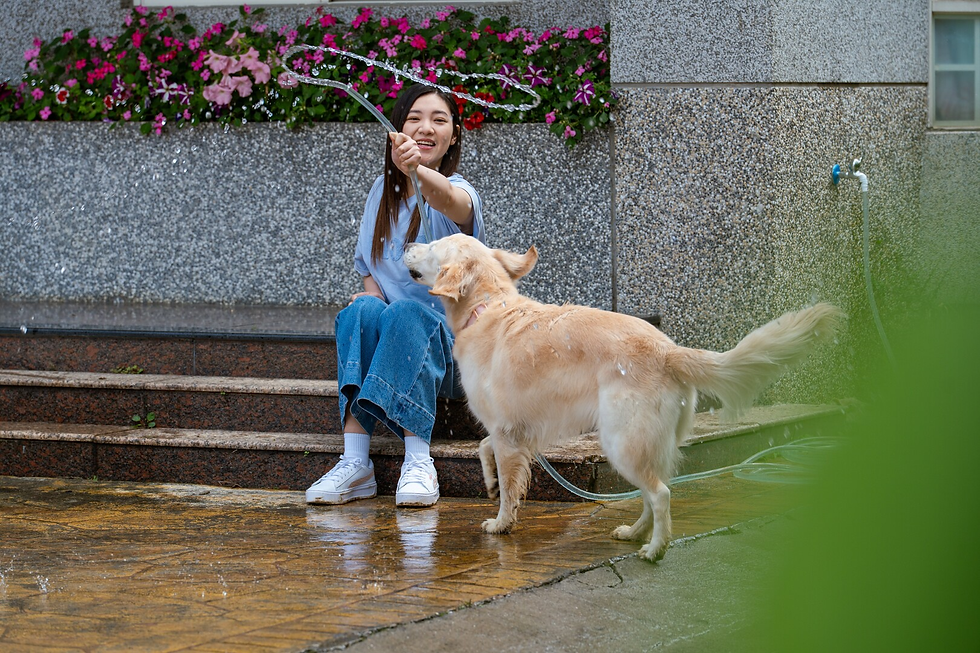
The filmmaking itself is filled with thoughtful creative choices. The flashback sequences between Xiao Zi and her father are especially effective, captured with the texture and feeling of old home videos that evoke memory in a deeply personal way. The montage sequences are beautifully assembled, the music enhances the emotional rhythm of the story, and even Xiao Zi's connection with her dog adds another layer of warmth and affection to the film.

The cinematography deserves special recognition. What makes the visual storytelling so effective is its flexibility. In the film's quieter moments, the camera often steps back and allows emotion to speak for itself. A distant overhead shot of Xiao Zi alone in her room communicates isolation and vulnerability. In contrast, the larger sequences embrace a more expansive visual language, including impressive underwater photography and sweeping aerial shots that capture the beauty and scale of the environment. Throughout the film, the cinematography always feels motivated by the needs of the story rather than by the desire to impress.
There is also a tremendous amount of craftsmanship on display throughout the production. From the performances and direction to the editing, music, and visual design, it is clear that a great deal of care has gone into bringing this true story to life. Yet what makes the film resonate is not its scale alone, but the heart behind it. Even in its largest moments, the story remains focused on relationships - a father trying to support his daughter, friends encouraging one another, and people finding strength together when faced with seemingly impossible circumstances.

By the end, it is not the tragedy that lingers in the memory, but the relationships. Second Life is ultimately a story about trust: trust in family, in friendship, in community, and in ourselves when life asks us to face the unknown. The film tells that story with sincerity, compassion, and a genuine affection for its characters, making their journey both inspiring and deeply rewarding to experience.
In June 2026, Second Life won multiple awards at LAFA, including Best Drama.


